

Quick Answer: Childrens dental health starts earlier than most parents realize. The American Academy of Pediatric Dentistry recommends a child’s first dental visit by their first birthday, or within six months of their first tooth coming in — whichever is first. From there, visits every six months. The biggest predictor of whether your child will grow up afraid of the dentist isn’t luck — it’s the first three visits. If those are calm, low-pressure, and judgment-free, dental anxiety typically doesn’t develop. If they’re rushed, painful, or frightening, the fear can last decades.
You already know your kid is paying attention.
They watch you brush. They notice when you flinch. They pick up on your tone when you say “we have a dentist appointment tomorrow.” Kids absorb our anxieties about healthcare the way they absorb language — effortlessly, and without us realizing we’re teaching them. If you grew up dreading the dentist, there’s a good chance you’re accidentally passing that feeling along, even when you’re trying hard not to. That alone is reason enough to take childrens dental health seriously from the start.
The good news: it’s not hard to break the cycle. Kids who grow up around dental care as a normal, boring part of life — like getting a haircut or going to the pediatrician — almost never develop dental anxiety. They just don’t. Because for them, the dentist is a person who looks at their teeth and then they go get a sticker. That’s the whole association.
Here’s what actually works at each age, what to avoid, and what to expect from us when you walk in — a practical guide to childrens dental health from a family dentist who sees kids every week.
When Should Childrens Dental Health Care Begin? The First Visit Timing
The American Academy of Pediatric Dentistry and the American Dental Association both recommend the same timing: by age 1, or within six months of the first tooth erupting — whichever comes first.
Most parents are surprised by this. A lot of families wait until 3 or 4. By then, the “getting to know the office” window has closed — if the first visit involves finding a cavity or getting a filling, the child’s entire framework for the dentist becomes “this is the place where something scary happens.”
The first visit at age 1 is intentionally undramatic:
- A quick look inside the mouth while the child sits on your lap
- A check of the teeth that have come in
- A conversation with you about feeding, bottle/sippy habits, brushing, and fluoride
- Maybe a light polish if they’ll tolerate it
- Usually 10–15 minutes total
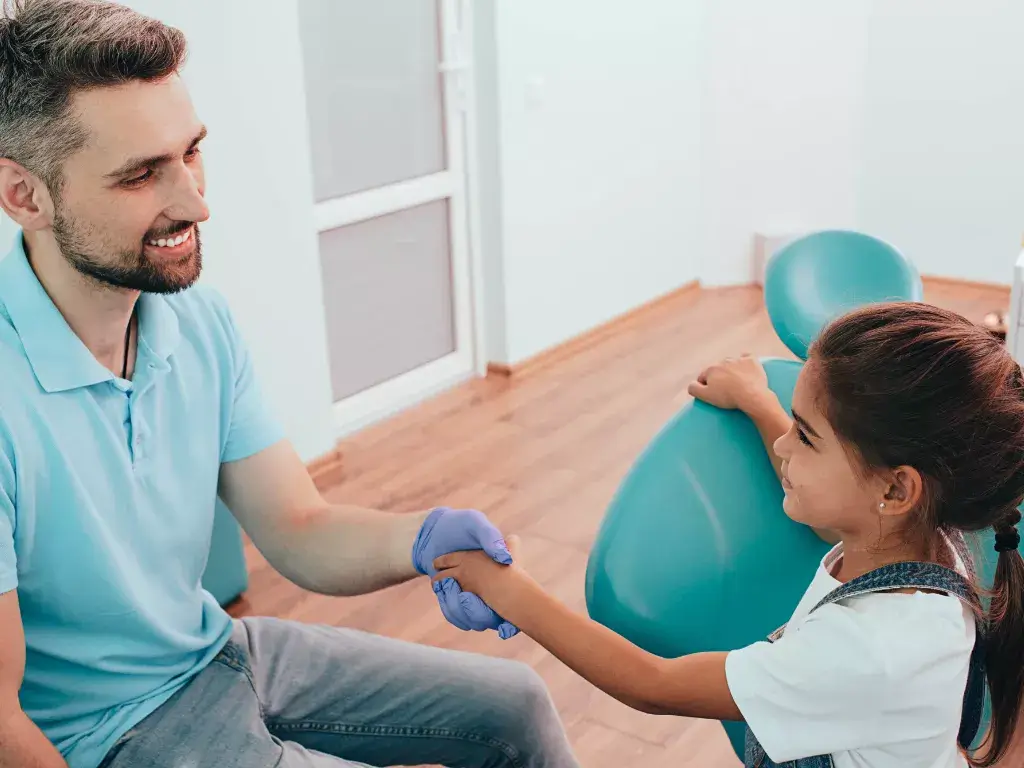
There’s no “exam” in the way you’d think of your own exam. It’s mostly about getting the child comfortable with the office, the chair, and a stranger looking in their mouth without it being a big deal. This first visit is the foundation of lifelong childrens dental health.
Teeth Brushing by Age: The Childrens Dental Health Routine That Actually Works
This is the area where most parenting advice falls apart — generic “brush your kid’s teeth twice a day” without any acknowledgment that toddlers don’t sit still, preschoolers negotiate everything, and 8-year-olds think they’ve got it handled when they absolutely do not.
Infants (0–12 months)
Before teeth come in, wipe the gums with a clean damp cloth after feedings. Once the first tooth appears, use a baby toothbrush or finger brush with a rice-grain-sized amount of fluoride toothpaste (yes, fluoride — the AAPD updated guidance years ago).
Toddlers (1–3 years)
Twice a day, rice-grain smear of fluoride toothpaste. You do the brushing. They can hold their own brush first if it helps, but then you finish the job. The key at this age is making it routine, not fun. Songs, apps, timers, and consistency matter more than perfect technique.
If your toddler resists, you’re not failing — this is developmentally normal. Tricks that help:
- Brush while they’re in the bath (less escape opportunity, water is calming)
- Two-person brush: one parent holds and sings, the other brushes
- Brush your own teeth first so they see the sequence
- Let them pick the toothbrush color/character at the store
- Keep it short — 60 seconds is fine at this age
Preschoolers (3–6 years)
Twice a day, pea-sized amount of fluoride toothpaste. Kids can start brushing themselves, but you still need to supervise and do a second pass yourself, especially at night. They lack the motor skills for thorough coverage until around age 6–7, even though they’ll insist they’ve got it.
Teach them to spit out extra toothpaste but not rinse aggressively — the small amount of fluoride residue strengthens enamel overnight.
School-age (6–12 years): The Childrens Dental Health Habits That Stick
Pea-sized fluoride toothpaste. Most kids can brush independently by 7 or 8, but the main failure mode is rushing. A 20-second pass doesn’t clean anything. Use a timer or an electric brush with a built-in timer — this is where electric toothbrushes shine for kids. This is also the age when good habits start driving childrens dental health outcomes into the teenage years.
Start flossing as soon as any two teeth touch each other. Floss picks are fine for kids; they’re much easier than string floss for small hands.
Tweens and Teens (12+)
By now they should have a full routine going on their own. Check in periodically — about once a month, ask to see their brush. Frayed bristles after three weeks means they’re pressing too hard. An untouched floss container means the flossing claim is fiction. No judgment — just a chance to course-correct before the next checkup. Consistent daily habits are the cornerstone of childrens dental health through the teen years and beyond.
The Childrens Dental Health Questions Parents Are Afraid to Bring Up
“My kid still uses a pacifier or sucks their thumb. Is that going to ruin their teeth?”
Not if it stops by about age 3–4. Thumb-sucking and pacifier use in infants and toddlers is developmentally normal and rarely causes lasting problems for childrens dental health. The issue starts if the habit continues past the age when adult teeth begin erupting (around 5–6), because sustained pressure can affect the shape of the dental arch and how teeth come in.
If your child is still thumb-sucking at 5+, we can talk about gentle strategies — we don’t lecture, and we don’t recommend things like hot sauce on the thumb or taping gloves on at night (which are surprisingly common “tips” online that traumatize kids without working).
“They had a cavity at age 3. Am I a bad parent?”
No. Early childhood cavities (sometimes called baby bottle tooth decay) are extremely common and often have nothing to do with how often you brush. Enamel strength, mouth pH, genetics, snacking patterns, and whether a bottle or sippy cup is being used through the night all play a role. Some kids get cavities no matter what you do. Others never do despite questionable hygiene. It’s not a report card on your parenting.
What matters: treating the cavity, understanding what caused it so we can adjust going forward, and keeping the visit a positive experience so the association doesn’t sour.
“Is fluoride safe for my child?”
Yes, at the appropriate amounts. This has been one of the most studied questions in dentistry for 70+ years, and the consensus across the ADA, AAPD, AAP (American Academy of Pediatrics), CDC, and World Health Organization is consistent: fluoride at recommended levels prevents cavities and is safe. We use age-appropriate amounts (rice grain under 3, pea-sized after) to keep doses well within safe ranges. Fluoride is one of the most important tools we have for protecting childrens dental health.
If you’re hesitant about fluoride due to something you read, we’re happy to talk through the actual evidence at a visit — no pressure, no lecture. Your kid, your call, but we want you to have accurate information to make it.
“What should I say to my child before their appointment?”
Use neutral, curious language — not reassuring language, which actually signals that something scary might happen. The best-known advice from pediatric dentists is to avoid these phrases even when you mean well:
- ❌ “It won’t hurt.”
- ❌ “Don’t be scared.”
- ❌ “They’ll be gentle with the shot.”
- ❌ “You have to be brave.”
Instead:
- ✓ “The dentist is going to count your teeth.”
- ✓ “They’ll take a quick look and see how they’re doing.”
- ✓ “After your visit, we can pick out a sticker, go get ice cream, or [insert small ritual].”
Assume it’ll be fine and treat it like a boring errand. Kids read calm from us.
“What if my child has sensory sensitivities or is on the autism spectrum?”
Tell us when you book. The dental office is a genuinely sensory-overwhelming environment — lights, sounds, smells, unexpected touch, unfamiliar people. For a child with sensory processing differences, that combination can make visits impossible without accommodations.
We adjust for sensory needs by scheduling quieter appointment times, allowing pre-visits where the child can just explore the office without any exam happening, using weighted blankets for kids who regulate better with deep pressure, offering noise-reducing ear protection, keeping lights dimmer when possible, and letting parents stay in the room. Not every kid needs every accommodation, and we follow your lead on what your specific child needs. If you’ve tried other offices and it hasn’t worked, please tell us what went wrong — that helps us plan.
Supporting Childrens Dental Health at Aster Smiles
Before the appointment: If it’s a first visit or your child is nervous, you can bring them to the office ahead of time just to walk through, meet the team, and sit in the chair — no exam, no pressure.
At the appointment: Parents are welcome in the room for every visit, at any age. We don’t do the “send the kid back alone” thing.
The exam: We use the “Tell, Show, Do” approach — explain what the tool does, show it, then use it. Nothing approaches a child’s mouth as a surprise.
If we find something: We talk about it with you openly, in plain language, with no pressure. Most pediatric dental issues are not urgent; you have time to think about options.
Positive reinforcement: Stickers, small prizes, genuine praise — the whole exit should feel like a win, even if the exam found something.
“We Can’t Afford Regular Childrens Dental Health Visits on Top of Everything Else”
This is one of the top reasons parents delay pediatric care, and it’s worth addressing directly. Kids’ cleanings and exams are typically covered at 100% by most dental insurance plans. If you don’t have insurance, our Wellness Plan for kids 12 and under is $21 per month and includes:
- All exams and X-rays (usually twice a year)
- Fluoride treatments at each visit
- 25% off any treatments needed (fillings, sealants, etc.)
For one child, that’s less than $3 per week. For two kids, it’s still less than many single sit-down restaurant meals. There’s no waiting period, no annual max, and you can enroll the same day you come in.
We set this up specifically because preventive childrens dental health care is high-value and often out of reach for families without insurance — and kids who miss routine care at 5 often come in at 10 with problems that cost 10x to fix.
Medically reviewed by Dr. Thanh Huynh, DMD, FAGD — Fellow of the Academy of General Dentistry, a credential held by fewer than 7% of general dentists. Aster Smiles welcomes pediatric patients alongside our adult and family practice. Last reviewed April 23, 2026.
Frequently Asked Questions About Childrens Dental Health
When should my child’s first dental visit be?
By age 1, or within six months of their first tooth — whichever comes first. This is the recommendation of both the American Academy of Pediatric Dentistry and the American Dental Association. The first visit is short, low-pressure, and mostly about getting your child comfortable with the office.
How often should kids go for childrens dental health checkups after the first visit?
Every six months, same as adults, for most kids. Children who are prone to cavities, have orthodontic concerns, or wear braces may be on a more frequent schedule.
What age should a child start brushing their own teeth?
They can hold the brush and “practice” around age 2, but parents should do the actual brushing until roughly age 6–7, when fine motor skills catch up. Even then, supervise and do a second pass at bedtime until age 8 or so.
Is fluoride toothpaste safe for kids?
Yes, at age-appropriate amounts. Use a rice-grain-sized smear for children under 3, and a pea-sized amount for kids 3 and up. This is the updated guidance from the ADA and AAPD — waiting until age 2 or later, which was older guidance, is no longer recommended.
My child is scared of the dentist. What childrens dental health options do we have?
Tell us when you book — that alone makes a big difference in how we plan the visit. We use Tell-Show-Do techniques for all procedures, allow parents in the room, offer pre-visits for nervous kids, and can use laughing gas (nitrous oxide) for children who need it during longer procedures. For kids with severe anxiety or sensory needs, we can sometimes coordinate additional accommodations — ask.
Do baby teeth really matter for long-term childrens dental health if they’re just going to fall out anyway?
Yes, for several reasons. Untreated decay in baby teeth can cause infection, pain, missed school, and can damage the developing adult tooth underneath. Baby teeth also hold space for adult teeth — losing them early can cause alignment problems that require orthodontic correction later. Treating a cavity in a baby tooth is genuinely worthwhile and an important part of childrens dental health.
What about sealants — are they necessary?
For most kids, yes. Dental sealants are a thin protective coating applied to the chewing surfaces of back molars, where most childhood cavities form. They’re comfortable, take a few minutes per tooth, and can reduce cavities in those teeth by 80% or more. Insurance typically covers sealants for kids, and our Wellness Plan discounts them significantly.
My teen suddenly refuses to go to the dentist. What do I do?
This is a common developmental phase and usually tied to feeling watched or judged — not specifically about dentistry. Let them drive the conversation. Ask what’s going on. Offer to come in the room with them, or specifically not to. Some teens respond well to knowing they can ask questions privately. Avoiding the appointment will make it harder later, but forcing compliance tends to backfire. If avoidance goes on for more than 6 months, call us — we have options.
First Dental Impressions Shape Adult Childrens Dental Health Habits for Life
Most adults who are terrified of the dentist today can trace it back to something that happened before age 10. That’s a fixable problem at the source. Protecting childrens dental health now means giving them a calmer adult relationship with dentistry later. If you haven’t booked your child’s first visit yet, or if it’s been a while, or if a previous visit didn’t go well — come try again. We’ve got a quiet corner of the schedule for nervous kids, and we move at their pace.
Book Your Comfort-First Visit or call (832) 476-7676. Mention it’s for a child (and their age) when you book so we can set up the right kind of appointment.
This article provides general information and is not personalized medical or pediatric advice. Every child is different — for individual concerns about your child’s dental development, please schedule an exam or consult your pediatric healthcare provider.
Related reading: Learn more about our dental checkups and cleanings in Cypress, our family-friendly Wellness Plan with discounted rates for kids 12 and under, and for parents who have their own dental anxiety, our guide to breaking the cycle of dental fear.