
Tooth Extraction in Cypress, TX — Done In-House With IV Sedation, Honest Second Opinions Welcome
Tooth extraction at Aster Smiles is performed in-house by Dr. Thanh Huynh, DMD, FAGD — including simple extractions, surgical removals, and complex cases most general dentists refer out. Whether you’ve been told you need a tooth extraction elsewhere and want a second opinion, or you’re in pain and need it handled today, we always try to save the tooth first. When extraction is the right call, IV sedation is available, aftercare is guided, and replacement options are planned before you walk out — no surprises.
Last Reviewed by Dr. Thanh Huynh, DMD, FAGD — April 2026

In-House Surgery
No referral needed
IV Sedation Available
Stay deeply relaxed through the procedure
Second Opinions Welcome
We try to save first
Saturday Hours
Open Saturdays 9–4
Losing a Tooth Is Bigger Than the Procedure. Let's Treat It That Way.
You’re probably here for one of two reasons. Either a tooth is hurting badly enough that something has to happen now. Or another dentist told you a tooth needs to come out, and something about that recommendation didn’t quite sit right — and you’re looking for a second opinion before you commit to losing it.
Both reasons are valid. Both deserve a real evaluation, not a rubber stamp. We’ve seen patients who genuinely needed an extraction and patients who absolutely didn’t — and the difference between the two often comes down to whether the dentist took twenty minutes to look closely or twenty seconds.
Here’s what we believe at Aster Smiles: a healthy natural tooth is always worth more than the best replacement. If your tooth can be saved with a root canal, crown, or careful repair, that’s the path we’ll recommend even though it’s less profitable for us than an extraction. When extraction genuinely is the right call, we want you to walk out understanding why — not just trusting that we said so.
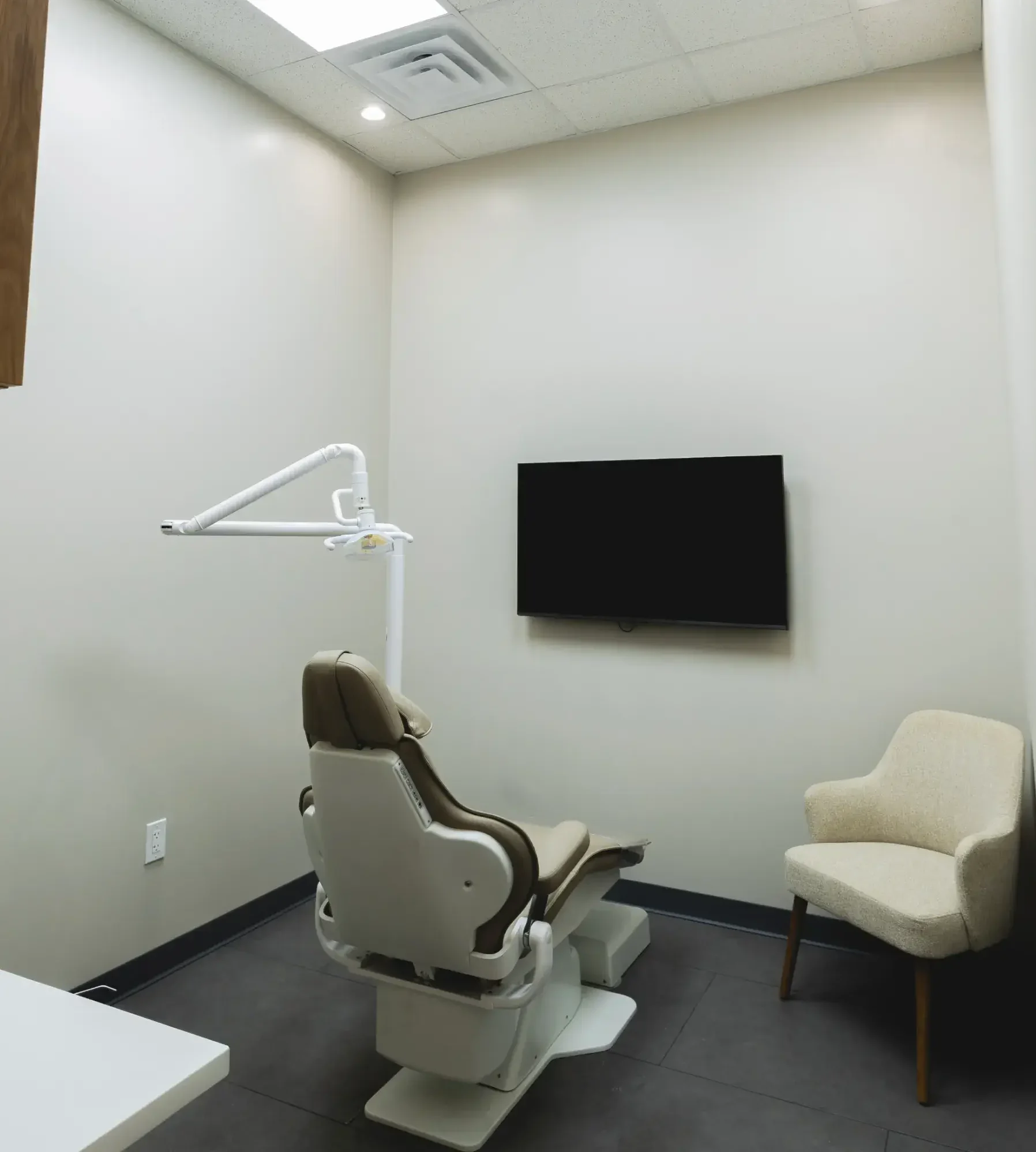
Tooth Extraction Done by a Dentist With Surgical Training — Not Outsourced
Most general dental practices send anything beyond the simplest extractions to an oral surgeon. That means another office, another consultation, another set of paperwork, and often a delay of weeks while you’re in pain or holding the issue at bay with antibiotics.
Dr. Huynh holds advanced training in oral surgery and IV sedation, so simple, surgical, and complex tooth extractions are all handled in-house at Aster Smiles. The same dentist who reviews your imaging plans the procedure, performs it, and follows up with you afterward.
That continuity matters when something is uncomfortable. You’re not explaining your situation to a new team. You’re not coordinating between two practices’ schedules and billing departments. And if the tooth is being removed in preparation for an implant or bone graft, the dentist placing the implant later is the same one who removed the tooth — meaning everything is planned together from day one.
When Is Tooth Extraction Actually the Right Decision?
A tooth extraction is the right call when keeping the tooth would cause more harm than removing it — when the structural damage, infection risk, or biological compromise is past the point where saving it is realistic. Dental schools teach this as a hierarchy: try to save first, repair if possible, replace only when the tooth can’t do its job anymore. Here are the situations where extraction tends to be the honest answer:
Severe Decay Beyond Repair
When a cavity has destroyed too much tooth structure for a crown or filling to hold reliably. Saving it long enough to fail again costs more than removing it cleanly the first time.
Cracked Below the Gumline
Vertical root fractures and cracks that extend below the gum can't be reliably bonded back together. The tooth will continue to fail and may host infection.
Infection That Won't Resolve
Persistent abscesses or infections that don't respond to root canal therapy or antibiotics. Extraction protects neighboring teeth and the bone underneath.
Failed Root Canal or Crown
When previous restorative work has failed and retreatment isn't realistic, removing the tooth and planning a clean replacement (often an implant) gives a more predictable outcome.
Advanced Bone Loss
Severe periodontal disease can erode the bone holding a tooth in place. Once the support is gone past a certain point, removal protects the rest of your smile.
Wisdom Teeth or Crowding
Impacted wisdom teeth, or crowded teeth that need to be removed for orthodontic alignment. Often planned (not emergency) extractions.
Got told you need an extraction? Bring your X-rays for a second opinion.
If you’re not convinced your tooth needs to come out, send us your X-rays or come in for a second opinion before scheduling. Sometimes a tooth flagged for extraction can be saved with a different approach. Sometimes the original recommendation was correct. Either way, you deserve to know which before losing a tooth permanently.
What You Get When You Choose Aster Smiles for Tooth Extraction
All In-House
Imaging, surgery, sedation, and follow-up all happen at Aster Smiles. No oral surgeon referral, no separate billing, no driving across town.
IV Sedation Available
Dr. Huynh is certified to provide IV sedation. Most patients stay deeply relaxed and may remember little of the procedure.
3D Imaging When Needed
For surgical extractions, low-radiation 3D imaging maps roots and nerve proximity before any incision. Especially important for lower molars and impacted teeth.
Replacement Plan Built In
Tooth replacement (implants, bridges, or partials) is discussed before extraction so you walk out with a clear path forward — not a new gap and a question mark.
Transparent Pricing
Written estimate before extraction. Most major PPO insurance accepted. Wellness Plan members save 25%. Financing through CareCredit and Cherry available.
Recovery Support
Written aftercare instructions, prescriptions filled before you leave, and a follow-up call within 24–48 hours to check on you. The procedure is the start, not the finish.
What Happens Before, During, and After Tooth Extraction
STEP 1 · BEFORE
Evaluation & Save-First Check
Dr. Huynh examines the tooth, takes digital X-rays, and walks you through what’s actually happening — including whether the tooth could be saved with a root canal, crown, or careful repair instead.
If extraction is the right call, you’ll get a written estimate, sedation options explained, and pre-op instructions before you leave.
STEP 2 · DURING
The Extraction Itself
Local anesthesia numbs the area completely — you feel pressure, not pain. Simple extractions take 15–30 minutes; surgical extractions take longer.
IV sedation is available throughout — most patients describe sedation extractions as feeling like a brief, comfortable nap.
STEP 3 · AFTER
Recovery & Replacement Plan
Most patients are mostly back to normal in 2–3 days. Soft foods, no straws for a week (to avoid dry socket), and we’ll call to check in.
Replacement (implant, bridge, or partial) typically planned 3–6 months later — bone needs time to heal first.
Why Trust Aster Smiles for Tooth Extraction
Tooth extraction is real surgery. Even simple extractions can become surgical mid-procedure if a root breaks. Experience and training are what protect you. Here’s the credential stack behind every tooth extraction at Aster Smiles:
- Dr. Thanh Huynh, DMD, FAGD — fellowship distinction held by fewer than 7% of dentists
- Advanced hands-on training in oral surgery and surgical extractions
- Low-radiation 3D imaging for surgical cases — root and nerve mapping before any incision
- IV sedation under a TSBDE Level 3 (Moderate Parenteral Sedation) permit for surgical comfort
- Continuous vital monitoring during sedation: heart rate, blood pressure, ECG, oxygen
- Sterile, hospital-grade infection control protocols throughout the surgical visit
Recovery Cheat Sheet (Save This)
FIRST 24 HOURS
Bite gauze for 30–45 min. Ice the cheek 20 on / 20 off. Soft cold foods only (yogurt, smoothies — no straws). Take meds as prescribed before pain hits.
DAYS 2–3
Swelling peaks. Switch to warm compresses. Gentle salt-water rinses after meals (don’t swish hard). Soft foods okay.
DAYS 4–7
Most patients feel mostly normal. Add semi-soft foods. No straws, no smoking, no spitting forcefully (dry socket risk).
CALL US RIGHT AWAY IF
Severe pain after day 3 (possible dry socket) · Fever or pus · Numbness that doesn’t improve · Heavy bleeding that won’t stop with pressure.
How Much Does Tooth Extraction Cost in Cypress?
Cost depends on whether the extraction is simple or surgical, the location of the tooth, and which sedation level you choose. We give every patient a written estimate before the procedure is scheduled.
OPTION 1
With Insurance
Most Major
PPO plans accepted
Most dental insurance covers tooth extraction — both simple and surgical. We verify your benefits up front so you know your out-of-pocket before scheduling.
OPTION 2 · BEST VALUE
Wellness Plan Members
25% Off
$24/mo adult plan. 25% off most treatments including extractions. IV sedation is priced the same for every patient. Often saves more on a single surgical extraction than a year of plan dues. See plan →
OPTION 3
Financing Available
0% APR
Through CareCredit & Cherry
Spread the cost over monthly payments — including 0% APR plans for qualified applicants. We help you apply during your consultation.
Specific dollar amounts depend on the complexity of the extraction (simple vs. surgical), the location of the tooth, and chosen sedation level. Every case starts with a consultation and a clear, written estimate before any surgery is scheduled.
Patients Who Trusted Us With Their Extraction
★★★★★
“I had my wisdom teeth extracted with sedation, and the entire process was smooth from start to finish. Dr. Huynh took the time to explain everything clearly before the procedure.”
— Don N., Cypress TX
★★★★★
“My anxiety was through the roof, but the doctor was so fast and gentle, I didn’t feel any pain whatsoever. I really appreciate everything, what a great experience.”
— Alethea B., Cypress TX
★★★★★
“Dr. and staff were very professional and explained everything very well. I got in and out quickly without any upselling on unnecessary procedures.”
— Armando D., Cypress TX
Tooth Extraction FAQs
Most plans treat medically necessary extractions as a covered procedure, but the details — deductible, waiting periods, your annual maximum — vary plan to plan. We work with many PPO plans including Aetna, Blue Cross Blue Shield of Texas, Cigna, Delta Dental, Guardian, MetLife, and UnitedHealthcare, and we verify your specific benefits before treatment, so you know your out-of-pocket before you are in the chair, not after.
You can still be seen. You get a written estimate before any work begins, financing is available through Cherry and CareCredit (subject to approval), and our Dental Wellness Plan — from $24/month — includes savings on treatment. If the tooth is infected and hurting, do not wait on the money question: call (832) 476-7676 and we will work through it with you.
Most consultations are scheduled within the same week, sometimes within a day or two. If you’re in active pain or have signs of infection, we hold same-day emergency slots during business hours — call (832) 476-7676. Surgical extractions are typically scheduled within 1–2 weeks of the consultation, sometimes the same week for urgent cases.
The procedure itself isn’t painful — local anesthesia numbs the area completely, so you feel pressure, not pain. IV sedation is available so most patients stay deeply relaxed and may remember little of the procedure. Recovery has some soreness for 2–3 days, easily managed with prescribed pain medication and ibuprofen. By day 4, most patients feel substantially better.
Yes, especially if something about the recommendation didn’t sit right. A healthy natural tooth is always worth more than the best replacement, and a thorough second look sometimes reveals options that weren’t presented (a careful root canal, a different crown approach, or selective bonding). Bring your X-rays from the previous office or we’ll take new ones. We’ll give you an honest read — sometimes confirming the extraction is the right call, sometimes finding a way to save the tooth. Either way, you get to decide with full information.
Most patients are mostly back to normal in 2–3 days. Swelling peaks at 48–72 hours, then drops fast. By day 4, most people feel substantially better. By day 7, most are fully back to normal activity. Plan for soft foods, ice on the cheek for the first day, no straws for a week (to avoid dry socket), and no smoking. Surgical extractions take a few days longer.
A simple extraction removes a fully erupted tooth with intact roots — usually 15–30 minutes, no incisions, and recovery is quick. A surgical extraction is needed when the tooth is impacted, broken at the gumline, or has unusual roots. It involves a small incision and sometimes removing a bit of bone — recovery takes a few days longer. Most general dentists send surgical extractions to an oral surgeon, but Dr. Huynh handles both in-house thanks to advanced surgical training.
Yes. Dr. Huynh is trained and certified to provide IV sedation in-office (TSBDE Level 3 Moderate Parenteral Sedation) — a credential most general dentists don’t hold. That means you don’t need a referral to a separate oral surgeon for the comfort level you actually want. You’ll need a responsible adult to drive you home; otherwise, IV sedation makes the whole procedure feel like a brief comfortable nap.
Cost depends on complexity (simple vs. surgical), tooth location, and sedation level. Most major dental insurance covers tooth extraction. Wellness Plan members save 25% on most treatments. IV sedation is priced the same for every patient. Financing through CareCredit and Cherry is available, including 0% APR for qualified applicants. Every case gets a clear, written estimate before scheduling.
Three main options, depending on the tooth’s location and your goals: Dental implants are the gold standard — a titanium post replaces the root, then a crown replaces the visible tooth. Most natural-feeling and longest-lasting. Bridges attach a replacement tooth to the two neighboring teeth. Partial dentures are removable. We discuss replacement before the extraction so you have a plan, not just a gap. Note: implants typically require waiting 3–6 months after extraction for the bone to heal, sometimes with bone grafting at the time of extraction.
Been Told You Need a Tooth Pulled? Get a Real Second Opinion First.
<p style=”text-align: center;”>We always try to save the tooth first. When extraction genuinely is the right call, IV sedation is available, replacement is planned, and aftercare is guided. At <a href=”/contact/”>our Cypress dental office</a> on FM 529. If you’re in pain right now, call us — same-day appointments during business hours.</p>We always try to save the tooth first. When extraction genuinely is the right call, IV sedation is available, replacement is planned, and aftercare is guided. At our Cypress dental office on FM 529. If you’re in pain right now, call us — same-day appointments during business hours.