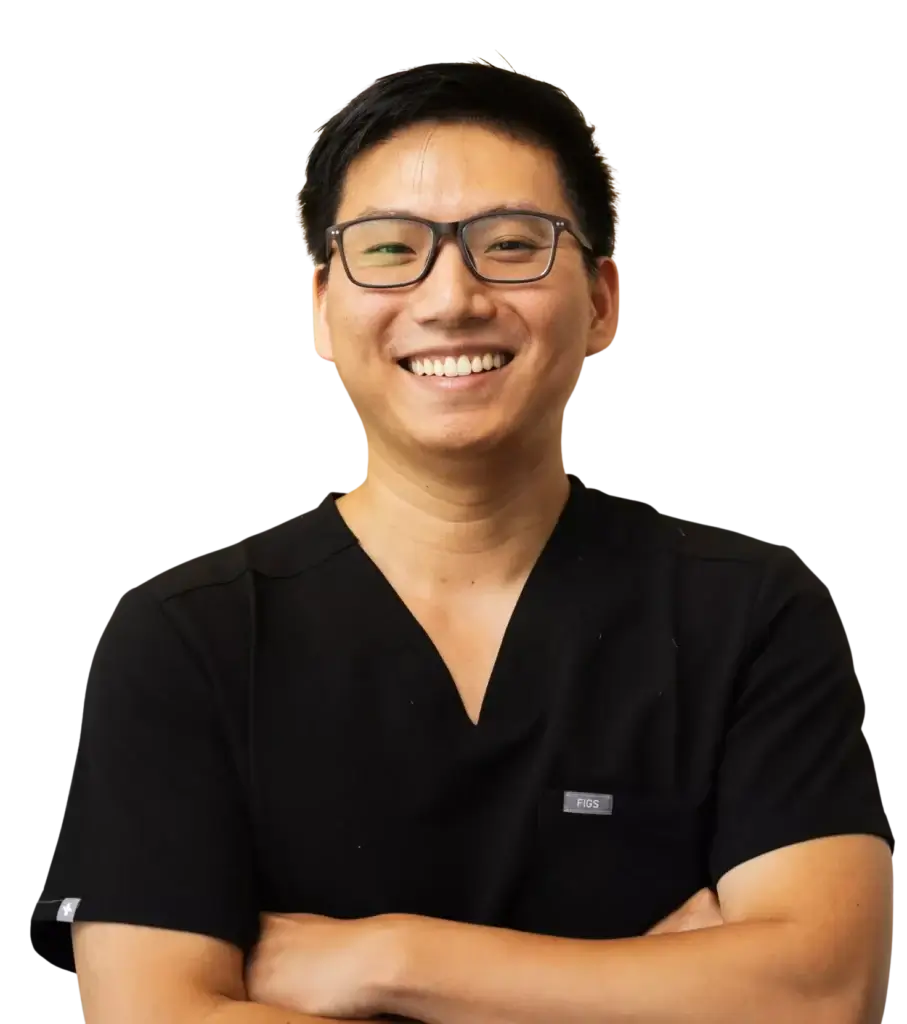
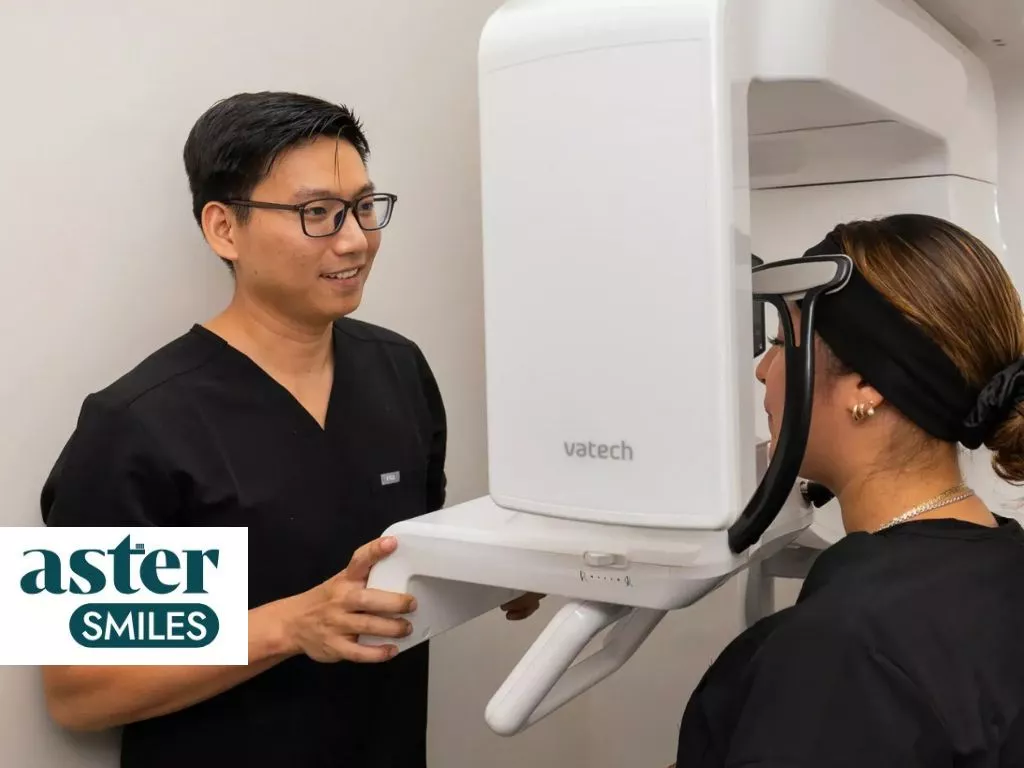
Quick Answer: A dentist for people who hate the dentist in Cypress, TX should do three things differently. First, they listen before they treat — every visit starts with a conversation, not a clipboard. Second, they offer real sedation options matched to your anxiety level, from a warm blanket and earplugs to laughing gas to full IV sedation. Third, they don’t shame you for waiting. At Aster Smiles, Dr. Thanh Huynh (DMD, FAGD) built the practice around the patients who’ve been avoiding care for years. No lectures. No judgment. A pace you control.
You don’t just dislike the dentist. You dread it. The sound of the drill, the bright lights overhead, the feeling of being trapped in a chair while someone pokes around your mouth — it all adds up to one thing: avoidance.
If you haven’t been to a dentist for people who hate the dentist in Cypress, TX, in three years, five years, maybe even a decade, you’re not alone. And you’re definitely not broken. Roughly 36 percent of Americans have some level of dental anxiety, and about 12 percent experience fear severe enough to avoid care entirely.
The Cycle That Keeps You Away

Here’s what the cycle usually looks like. Something small starts — a twinge when you chew, a spot that looks a little dark, gums that bleed when you brush. You know you should call a dentist, but the thought of sitting in that chair triggers a wave of dread.
So you wait. Weeks turn into months. Months turn into years. And the longer you wait, the worse you imagine things have gotten, which makes the idea of going back even more terrifying. You start telling yourself things like: “It’s too late now,” or “They’re going to judge me for letting it get this bad.”
This cycle is incredibly common. Patients walk into our Cypress, TX office every week and say some version of the same thing: “I haven’t been to the dentist in years and I’m so embarrassed about how bad it’s gotten.” Some have been avoiding care since childhood because of a rough experience with a dentist who didn’t take the time to listen.
What “comfort-focused dentistry” Actually Means at Aster Smiles
The phrase “comfort-focused dentistry” gets used loosely on most dental websites. We want to tell you what it actually means in practice at Aster Smiles in Cypress, TX, because the difference between marketing language and a real protocol is the difference between you leaving in tears and you leaving wondering why you waited so long.
comfort-focused dentistry isn’t one technique. It’s a stack of decisions made before, during, and after the appointment that, together, mean most patients feel pressure but not pain — and the ones who do feel something can stop the procedure with a hand signal.
The numbing matters more than people think
The most common reason a dental visit hurts is that the numbing wasn’t done well — not enough time, not the right depth, not enough volume. We apply a strong topical gel before any injection and let it sit long enough to actually work, which is at least a full minute and usually longer. The injection itself uses a slow, controlled delivery rather than the quick push that creates most of the sting people remember from childhood. For patients who are needle-phobic, we can pair the injection with vibration at the site, which competes with the pain signal at the nerve level before it ever reaches your brain.
If you’ve been numbed before and still felt the work, that wasn’t your tolerance — it was usually the technique. We see this all the time with patients who tell us “the last dentist didn’t believe me when I said I was still feeling it.” That stops being a problem when the protocol allows for re-numbing, longer wait times, and switching to a different anesthetic if the first one isn’t taking. The infected-tooth situation is its own thing — local anesthetic struggles in highly acidic infected tissue, and that’s actually one of the main reasons we use IV sedation for root canals on badly infected teeth, where patients would otherwise have a miserable experience.
The sedation tier matches what you actually need
We offer two tiers of sedation, and a single visit can use either of them depending on what you’re comfortable with:
- Nitrous oxide (laughing gas) — a soft nose mask, takes effect in a few minutes, wears off in a few more after we turn it off. You can drive home. Most patients feel floaty and detached but stay fully awake. Good for routine cleanings or a single filling if you’re nervous but not anxious enough for IV.
- IV moderate sedation — delivered through a small IV line in your arm. Dr. Huynh administers it himself and monitors you the whole time. Most patients have little or no memory of the procedure, even though technically they were responsive throughout. This is the level we use for patients with severe anxiety, big multi-procedure visits, or anyone who’s avoided care for years and wants to get everything done in one or two visits instead of eight.
The IV moderate sedation tier is the one that matters most for the patients this article is written for, and it’s also the tier that most general dentists in Cypress don’t offer. Texas requires a separate state board permit (TSBDE Level 3) to administer IV moderate sedation in a dental office. Dr. Huynh holds that permit. Most general dentists in the area don’t, which is why they refer their anxious or complex cases out — frequently to us. Saying “we offer sedation” without specifying which tier covers a lot of ground. When we say it, it includes IV.
The flat rate for sedation, and why it’s flat
Our IV sedation fee is $500 if your visit takes up to an hour, $800 from one to two hours, and a flat $1,000 beyond two hours. That’s the same rate for every patient — not a Wellness Plan tier, not a new-patient promo. We extended the flat rate to all patients in May 2026 because per-fifteen-minute anesthesia billing turns a sedation visit into a moving target, and that’s exactly the kind of surprise that keeps anxious patients away from dental offices in the first place.
The reason the rate can be that low and that flat is that Dr. Huynh administers the sedation himself instead of contracting an outside anesthesiologist who bills the visit separately. The TSBDE Level 3 permit is the thing that lets us do that. It’s also the reason comfort-focused dentistry, in our particular practice, can mean a planned extraction-and-implant visit under sedation for a patient who hasn’t been to a dentist in fifteen years, with the total cost of the sedation portion known in advance.
The hand signal is real, and it works
Every patient is told before we start that there’s a hand signal — a simple raised hand — that pauses the procedure immediately. This isn’t a comfort line we say to anxious patients. It’s a working protocol the entire team is trained on. Dr. Huynh stops, the assistant stops, the equipment comes out, and we have a conversation about what’s happening before deciding whether to continue, switch approaches, or end the visit and pick it up another day. Most patients who know this in advance never need to use it. Knowing they can is what makes them comfortable.
When Avoidance Stops Working
For most patients of a dentist for people who hate the dentist, the breaking point eventually comes. The pain gets loud enough that it drowns out the fear. A tooth cracks at dinner. An ache that used to come and go becomes constant. Your face swells and you’re up at 3 a.m. searching “is this an emergency” on your phone.
That moment — the one where the status quo becomes unbearable — is the turning point. And it’s where a lot of our patients in Cypress, TX finally decide to reach out. Not because the fear went away, but because the pain or the worry outweighed it.
The thing is, you shouldn’t have to wait until something breaks to feel safe walking into a dental office.
What Makes a Dentist for People Who Hate the Dentist Different
When Dr. Thanh Huynh, DMD, FAGD, built Aster Smiles, the practice was designed around a single question: what would dental care look like if it were built for the people who avoid it?
What makes a dentist for people who hate the dentist different starts before you ever sit in the chair. At Aster Smiles in Cypress, TX, every visit begins with a conversation — not a clipboard. Dr. Huynh wants to know what happened before, what you’re afraid of, and what would make this visit feel different.
From there, sedation dentistry options are matched to your anxiety level:
- Calming support — for mild nerves. A warm blanket, noise-canceling earplugs, neck pillow, and a pace you control.
- Laughing gas (nitrous oxide) — takes the edge off within minutes. You breathe it in through a small mask, feel relaxed but awake, and it wears off as soon as the mask comes off.
- IV sedation — for severe anxiety or longer procedures. You drift into a deeply relaxed state and most patients remember little to nothing about the appointment. Dr. Huynh completed advanced IV sedation training beyond standard DMD requirements — the same techniques used in oral surgery settings.
You also have a hand signal you can use at any point to pause the procedure. No guessing whether the dentist noticed you’re uncomfortable. You raise your hand, everything stops, and Dr. Huynh checks in.
This isn’t “gentle dentistry” as a marketing phrase. It’s a practice built for the person who has been dodging the dentist like it’s a plague and finally wants a way back in.
What Patients Say at a Dentist for People Who Hate the Dentist
The shift we see most often isn’t just physical — it’s emotional. Patients who walked in convinced they’d be judged leave saying they wish they’d come sooner. The person who avoided the dentist for a decade books their next cleaning before they leave the office.
One thing Dr. Huynh hears regularly: “I can’t believe I waited this long.” Not because the work was complicated, but because the experience was nothing like what they’d been dreading.
That relief is what people describe most often. The feeling of finally having a dental home where you’re treated like a person, not a set of teeth — that’s what keeps patients coming back. Many end up bringing their kids, their spouse, their parents. The cycle of avoidance breaks, and something better takes its place.
What to Expect at Your First Visit at a Dentist for People Who Hate the Dentist
If it’s been years, here’s what actually happens when you walk in. Not what you think will happen — what really happens.
You’ll fill out paperwork at home. Forms come to you by email or text before the visit. You won’t be handed a clipboard the moment you sit down.
You’ll meet Dr. Huynh in a regular room — not the chair. The first conversation happens face to face, sitting up. He’ll ask what you’re afraid of, what’s been bothering you, and what you want out of this visit. There’s no exam yet. Just talking.
You decide what happens next. If you want sedation matched to your anxiety level before any cleaning or X-ray, that’s the plan. If you want to start with just a look around so you know what you’re working with, that’s the plan. Many patients book a “tour visit” first — no instruments, no treatment, just a chance to see the space and meet the team.
You’ll get a written treatment plan with prices. No surprise bills. No “we’ll figure out the cost later.” You’ll know what each step costs before you say yes to anything.
You can stop at any time. A simple hand signal pauses everything. Dr. Huynh checks in. You decide whether to keep going, take a break, or come back another day.
This is what makes a dentist for people who hate the dentist different. The control stays with you the whole time.
Your Teeth Don’t Care How Long It’s Been — And Neither Do We

If you’ve been putting off the dentist because of fear or a bad experience, here’s what a dentist for people who hate the dentist actually means in practice: Dr. Huynh and the team at Aster Smiles in Cypress, TX have seen it all. Years of missed visits. Teeth you’re embarrassed about. Fear you can’t quite explain. None of it changes how you’ll be treated.
No lectures. No shame. Just a clear plan, honest answers, and a pace that works for you.
No insurance? Our IV sedation fee is a flat $500 up to an hour, $800 for one to two hours, or $1,000 past two hours — the same rate for every patient, with no membership tier required. The Aster Smiles Wellness Plan ($24 per month for adults) still covers your cleanings, exams, and X-rays at a reduced rate, but the sedation pricing applies whether you’re on the plan or not. Saturday hours are available from 9 AM to 4 PM for patients who can’t take time off during the week.
Ready to Break the Cycle?
Book Your Comfort-First Visit →
Or call us directly: (832) 476-7676
Aster Smiles | 20611 FM 529, Suite 109, Cypress, TX 77433
FAQs: Finding the Right Dentist for People Who Hate the Dentist
How do I find a good dentist for people who hate the dentist?
Start by asking how the office handles anxious patients. A dentist that’s actually built for this will offer real sedation options — not just “we’re gentle.” Look for IV sedation, laughing gas, and a written approach to anxious patients. At Aster Smiles, Dr. Huynh trained in advanced sedation beyond standard DMD requirements, so the options match your real anxiety level.
Will I be judged if I haven’t seen a dentist in years?
No. Dr. Huynh hears some version of “I’m embarrassed about how bad it’s gotten” almost every week. That’s what a dentist for people who hate the dentist sees regularly. Years of missed visits don’t change how you’re treated. The first conversation focuses on what you want out of this visit — not why you waited.
Can I be fully asleep for my dental work?
IV sedation puts you in a deeply relaxed state where most patients remember little to nothing about the appointment. It’s the same approach used in oral surgery settings. Dr. Huynh personally administers it, and you stay monitored the entire time.
What if I can’t afford it and don’t have insurance?
Our IV sedation is a flat $500 up to an hour, $800 for one to two hours, or $1,000 past two — same rate for every patient, no Wellness Plan tier required. The Wellness Plan ($24 per month) covers your exams, X-rays, and reduced-rate cleanings on top of that. No contracts, no waiting periods, and the plan can be used on your first visit.
What if I get there and panic?
You can stop at any time. There’s a hand signal that pauses everything immediately. You can also choose to do nothing on the first visit — just a tour, a chair ride, and a conversation. Many patients do exactly that and book actual treatment for a follow-up once they’ve seen the space.
Is there a dentist near me who handles severe dental anxiety?
If you’re in Cypress or nearby communities like Bridgeland, Towne Lake, Fairfield, Coles Crossing, or Copperfield, Aster Smiles is the dentist for people who hate the dentist that’s actually built around your anxiety. Saturday hours are available 9 AM – 4 PM. Book online or call (832) 476-7676.
What if the numbing doesn’t work on me?
Numbing usually doesn’t fail because of you — it fails because of technique. We apply topical anesthetic for at least a full minute, use a slow controlled injection, and check that the area is actually numb before any work begins. If the first round doesn’t take, we re-numb, switch anesthetic if needed, and wait for it to work. For patients where local anesthetic has historically been unreliable, IV moderate sedation is a strong backup option — it works on a different mechanism than local and doesn’t depend on the tissue around the tooth being healthy.
I’m terrified of needles. Can you make the shots actually comfortable?
For most patients, yes — the combination of strong topical gel applied for a full minute, slow controlled injection, and vibration at the site (which competes with the pain signal at the nerve level) makes the shot feel like pressure rather than a sharp sting. Patients who describe themselves as needle-phobic regularly tell us afterward that they didn’t feel the injection. If needle-phobia is severe enough that you can’t tolerate the IV start either, nitrous oxide before the IV start can take the edge off enough to allow the IV — we do this often.
What does TSBDE Level 3 actually mean, and why does it matter?
The Texas State Board of Dental Examiners issues sedation permits at four levels. Level 3 — Moderate Parenteral Sedation — is the credential required to administer IV sedation in a dental office. It requires formal coursework, supervised case experience, airway-management certification, emergency-response training, and ongoing renewal. Most general dentists in Cypress don’t hold this permit and so can’t offer IV sedation in-house. Dr. Huynh holds it, which is why we can offer IV sedation as part of routine restorative work — fillings, crowns, root canals — and not just for oral surgery.
Will I remember anything if I choose IV sedation?
Most patients have little or no memory of the procedure. The medications used in moderate IV sedation affect how memories form during the visit, even though you remained responsive throughout. Patients who’ve had bad dental experiences in the past often find the partial amnesia especially helpful — it interrupts the cycle of vivid traumatic memories that drove their avoidance in the first place. You’ll need someone to drive you home, and we ask that you take it easy the rest of the day.
What if my teeth are too far gone to save?
We see this concern often, especially from patients who’ve avoided care for ten or fifteen years. The answer is almost never “all of them need to come out.” Modern restorative dentistry can rebuild a lot — crowns to save cracked teeth, root canals to save infected ones, implants to replace teeth that genuinely can’t be saved. We do this work in staged, comfortable visits under sedation if you want. The exam visit is honest: we’ll show you the X-rays, walk you through which teeth can be saved and which can’t, and give you a written plan with prices before any treatment begins. The first decision is always yours.
This article is for informational purposes only and does not constitute medical advice. Every patient’s situation is different. Please consult with Dr. Huynh or your healthcare provider for guidance specific to your needs.