Quick Answer: A professional dental cleaning in Cypress takes 45–60 minutes and typically costs $75–$200 out of pocket, though most dental insurance plans cover two cleanings per year at 100%. A dental cleaning in Cypress includes examining your teeth and gums, removing tartar (hardened plaque) with specialized instruments, polishing away surface stains, professional flossing, and a doctor exam. Most adults should come in every six months. If it’s been longer than that — even a lot longer — you can still come in, and nobody at Aster Smiles will make you feel bad about the gap.
If you’re reading this, you’re probably close to booking a cleaning. Maybe you’ve been meaning to for months. Maybe the last time you went was during a different life — a different job, a different city, a different decade. Maybe you brushed aggressively yesterday and noticed bleeding for the first time, and something about that felt more urgent than usual.
Whatever got you here, the good news is that booking a dental cleaning in Cypress is one of the easier healthcare decisions you’ll make. It’s short, it’s not painful (unless significant problems are present), it’s usually covered by insurance, and if you haven’t been in a while, that’s genuinely fine — we see it every week.
This guide walks through exactly what happens at a dental cleaning in Cypress, what it costs, when to come in, and what to do if anxiety or cost has been the barrier.
What Actually Happens at a Dental Cleaning in Cypress
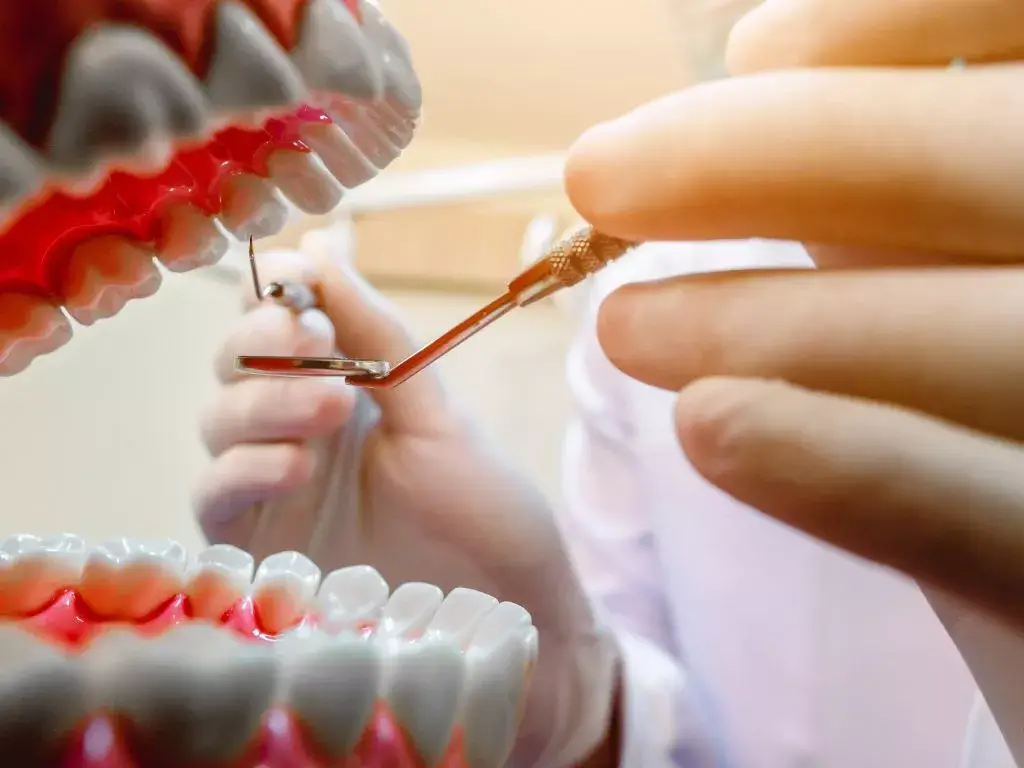
A dental cleaning in Cypress isn’t one thing — it’s a structured sequence that typically takes 45–60 minutes. Here’s what each stage is doing and why.
Stage 1: Intake and Medical History Review (5 minutes)
The hygienist asks about any changes since your last visit — new medications, health updates, pregnancy, anxiety concerns, sensitivity complaints. This isn’t bureaucracy; some medications affect your mouth (dry mouth from antidepressants, for example), and some conditions change how we approach the cleaning.
Stage 2: Examination and Measurement (5–10 minutes)
The hygienist looks at your teeth and gums, and checks for the subtle signs you’d never notice at home:
- Gum pocket depths are measured at six points around each tooth. Healthy gums measure 1–3mm. 4mm suggests early gum disease. 5mm+ means the infection has progressed.
- Gum tissue color, texture, and bleeding tendency are assessed.
- Existing fillings, crowns, and implants are checked for wear or decay around the edges.
- The soft tissues (cheeks, tongue, floor of mouth, throat) are screened for any lesions — part of our routine oral cancer screening.
This five-minute check is doing more diagnostic work than most patients realize.
Stage 3: Scaling — Tartar Removal (15–25 minutes)
This is the part you feel most. Tartar (also called calculus) is hardened plaque that’s welded itself to your teeth. It can’t be brushed off. Two tools do the work:
- Ultrasonic scaler: A vibrating tool that uses high-frequency sound waves to break up tartar, while water cools and rinses the area. This does the bulk of the work.
- Hand instruments: Small, curved tools (scalers and curettes) for detail work, especially around individual teeth and below the gumline.
You’ll feel pressure, vibration, and water. No pain in a healthy mouth. If you’re sensitive or have receded gums, let the hygienist know — they can adjust the technique or apply a topical numbing gel.
Stage 4: Polishing (5 minutes)
A prophylaxis paste (called “prophy paste”) is applied with a small electric brush. This buffs away surface stains from coffee, tea, wine, and daily wear. The gritty texture is mildly unpleasant but brief. Afterward, your teeth feel noticeably smoother.
Stage 5: Professional Flossing (2–3 minutes)
The hygienist flosses every space to dislodge anything left behind and confirm nothing was missed.
Stage 6: Fluoride Treatment (5 minutes, optional)
For patients prone to cavities, a concentrated fluoride varnish or foam is applied. Takes a few minutes and you avoid eating for 30 minutes afterward. Often included in insurance for kids; an add-on for adults (usually $25–$50).
Stage 7: Doctor Exam (5–10 minutes)
The dentist comes in, reviews the hygienist’s findings, and does a separate exam — looking at teeth individually for decay or wear patterns, checking your bite, and reviewing any X-rays taken that day. This is when you discuss treatment recommendations for anything that came up.
Total visit: about 45–60 minutes. Longer if you need X-rays that day (typical for new patients or patients overdue for their annual X-rays) or if deeper cleaning is needed.
How Much Does a Dental Cleaning in Cypress Cost?
Straight answer:
| Situation | Typical Cost |
|---|---|
| With most dental insurance (in-network) | $0 (covered at 100%, usually twice/year) |
| Without insurance (cash pay) | $75–$200 depending on X-rays and exam |
| With our Wellness Plan ($24/month) | $32 for the cleaning, exam/X-rays included in membership |
| Deep cleaning (scaling and root planing) | $200–$400 per quadrant (four quadrants total) |
Most healthy adults need only a regular cleaning. A deep cleaning (scaling and root planing) is a therapeutic treatment for patients with active gum disease — not a “better cleaning” or an upsell. Your hygienist will tell you if you need one based on gum pocket depths and bone loss on X-rays. If someone recommends a deep cleaning without measuring your pockets or showing you the clinical reason, get a second opinion.
Insurance Notes
Most dental insurance plans treat cleanings as preventive care and cover them at 100%. This is because insurance companies know paying for your cleaning now is cheaper than paying for your crown later. Specifics to check:
- Frequency coverage. Most plans cover 2 cleanings per calendar year. Some cover 3–4 for patients with gum disease history.
- Waiting periods. New dental plans sometimes have a 6-month waiting period before coverage starts. Not typical for preventive care, but worth checking.
- X-ray frequency limits. Most plans cover bitewings annually and full-set X-rays every 3–5 years.
If you’re unsure about your coverage, tell us when you book — we’ll verify benefits before your visit so there are no surprises.
No Insurance? Options for Affordable Care
If you don’t have dental insurance and a cleaning out of pocket feels like a stretch:
- Our Wellness Plan at $24/month covers your exam and X-rays in the membership, with cleanings at a flat $32. Two cleanings and two exams per year comes to about $352 total annually — typically less than a single uninsured visit at most offices.
- No financing, no contract, no waiting period — you can sign up at your first visit and use the benefits the same day.
- HSA/FSA funds can be used for cleanings if you have them through work.
How Often Should You Schedule a Dental Cleaning in Cypress?
Every six months is the standard recommendation for a dental cleaning in Cypress and nationally. But “every six months” isn’t a universal law — it’s a reasonable default for healthy patients.
Come in more often (every 3–4 months) if you have:
- History of gum disease or periodontal treatment
- Diabetes
- Pregnancy (gum inflammation increases during pregnancy)
- Smoking or recent smoking history
- Medications that reduce saliva (many antidepressants, antihistamines, blood pressure meds)
- Existing implants or a lot of dental restorations
- Tendency to build up tartar quickly (some people just do — it’s largely genetic)
Come in at the standard 6-month interval if you:
- Have healthy gums with no pocket depths over 3mm
- Don’t smoke
- Haven’t had significant decay in years
- Brush and floss consistently
Some patients with excellent hygiene and no risk factors do fine at 9–12 month intervals. This is a conversation to have with your hygienist — it’s not a one-size-fits-all schedule.
When a Standard Dental Cleaning in Cypress Isn’t Enough: Deep Cleaning
If it’s been years since your last cleaning, or if you have signs of gum disease (bleeding, recession, bad breath, pocket depths over 4mm on examination), a standard cleaning may not be sufficient.
A deep cleaning — clinically called scaling and root planing (SRP) — goes below the gumline to remove bacteria and tartar from the pockets where gum disease lives. It’s usually done:
- Under local anesthesia (numbing the area so you’re comfortable)
- Over 1–2 visits, with two quadrants cleaned per visit
- With follow-up care to monitor gum response
A deep cleaning isn’t a regular cleaning “but more thorough.” It’s a different procedure with its own diagnosis and insurance code. If your hygienist recommends one, ask to see your pocket depth measurements and X-rays — a legitimate deep cleaning recommendation is backed by clinical evidence, not just “you have some buildup.”
“It’s Been Years Since My Last Dental Cleaning in Cypress. What Should I Expect?”
If you haven’t had a dental cleaning in Cypress — or anywhere — for a long time (more than two years, or you’ve lost count), here’s the honest version of what happens:
- Nobody will lecture you. Delayed care is common, and we see patients restarting every week. The visit starts with a conversation about what’s going on, not a list of grievances about the gap.
- You’ll have more tartar than someone who comes in regularly. That means the cleaning takes longer. A first-visit cleaning after years away often runs 75–90 minutes instead of 45.
- There’s a higher chance of finding gum inflammation or early gum disease. This is normal and usually reversible with a thorough cleaning plus improved home care.
- You may need X-rays taken that day if you don’t have recent ones from another office. Usually a full-mouth series, which gives us a baseline we can compare against over time.
- You may need a deep cleaning instead of a regular one if there’s significant tartar below the gumline or pocket depths are elevated. If so, we’ll explain why and walk through what it involves.
There’s no moral failure in any of this. Teeth, like backs and knees, benefit from routine care but don’t have to be abandoned just because you missed some of it.
The first visit back is almost always easier than patients fear. And the second visit is much easier than the first, because we’re already past the “starting over” moment.
What If I’m Anxious About a Dental Cleaning in Cypress?
Some patients genuinely dread getting a dental cleaning in Cypress — the sound of the ultrasonic scaler, the feeling of having hands in their mouth, the anticipation of bad news. If that’s you, tell us when you book.
Options we offer:
- Extra time scheduled so the appointment doesn’t feel rushed
- Topical numbing gel for sensitive gums
- Nitrous oxide (laughing gas) for moderate anxiety — you stay awake and can drive yourself home afterward
- IV sedation for significant anxiety or for patients who haven’t been in years and are combining the cleaning with other treatment
Dr. Huynh has advanced training in sedation dentistry specifically for anxious patients. You don’t need to “tough it out” — telling us your concern when you book is the most useful thing you can do.
Medically reviewed by Dr. Thanh Huynh, DMD, FAGD — Fellow of the Academy of General Dentistry, a credential held by fewer than 7% of general dentists. Last reviewed April 23, 2026.
Frequently Asked Questions About Dental Cleaning in Cypress
How long does a dental cleaning in Cypress take?
45–60 minutes for a routine cleaning at a normal 6-month interval. Longer (75–90 minutes) if it’s been more than a year, if new X-rays are needed, or if there’s significant tartar buildup. Deep cleanings are done over 1–2 longer appointments.
Does a cleaning hurt?
For a healthy patient on a regular schedule, no — just pressure, vibration, and water. If you have gum inflammation or recession, some areas may feel tender. Patients with significant tartar buildup after years away can have more sensitivity, but topical numbing gel or nitrous oxide can manage it.
Can I get a dental cleaning in Cypress if I’m pregnant?
Yes — routine cleanings are not only safe during pregnancy but actively recommended. Pregnancy hormones increase gum inflammation, and gum disease during pregnancy has been linked to preterm birth. Many OBs specifically ask about dental care during prenatal visits.
What if I’m embarrassed about how bad my teeth look?
Show up anyway. Whatever you’re imagining we’re going to see, we’ve seen worse and seen it often. Our job is to fix things, not judge them. If you’re genuinely worried, you can tell us when you book — we’ll make sure the hygienist and dentist are aware so the conversation stays clinical and practical.
Why do my gums bleed during cleanings?
Bleeding during a cleaning almost always indicates gum inflammation — gingivitis, typically. This is not because the hygienist is being rough. It’s your gums telling you there’s been buildup you couldn’t see. The good news: after 2–3 weeks of improved home care post-cleaning, the bleeding typically stops entirely.
Is a deep cleaning just a regular cleaning that’s more expensive?
No. A regular cleaning (prophylaxis) is above and at the gumline for patients with healthy gums. A deep cleaning (scaling and root planing) is below the gumline for patients with active gum disease — diagnosed by measuring pocket depths and reviewing bone levels on X-rays. Different procedure, different diagnosis, different insurance code. Don’t accept a deep cleaning recommendation without seeing the clinical evidence.
Can I get X-rays taken at my cleaning?
Yes — this is standard. Most new patients get a full-mouth series (14–18 images) or a panoramic X-ray at their first visit to establish a baseline. After that, bitewings (4 small images) are typically taken once a year for adults with cavity history, or every 2–3 years for patients with stable dental health. We only take what’s clinically useful.
What should I do if my dental cleaning in Cypress finds a cavity?
Nothing dramatic. Small cavities are caught early and fixed with a filling, usually at a follow-up visit. We show you where it is (often with an intraoral camera image) and explain your options. No pressure to schedule treatment that day — you decide the timeline that works for you.
Ready to Book Your Dental Cleaning in Cypress?
Whether it’s been six months or six years, the best time to book your cleaning is this week. First visits back are not a big deal — we promise. Mention your specific situation when you book (last visit time, anxiety level, any cost concerns) and we’ll build the appointment around it.
Book Your Comfort-First Visit or call (832) 476-7676. Saturday appointments available.
This article provides general information and is not personalized medical advice. Individual recommendations depend on your oral health history, medical conditions, and current exam findings.
Related reading: Learn more about our dental checkups and cleanings in Cypress, our Wellness Plan for discounted preventive care without insurance, and our gum disease treatment if bleeding gums or pocket depths have been flagged.