
ORAL HEALTH EDUCATION
Do You Need a Bone Graft Before a Dental Implant? How Dr. Huynh Decides
Dr. Thanh Huynh, DMD, FAGD · May 11, 2026 · 7 min read · Cypress, TX
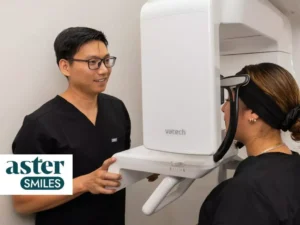
Direct answer: A bone graft is a short procedure that rebuilds jawbone where a tooth used to be, so a dental implant has something solid to anchor into. The body accepts a graft most reliably when it’s placed at the same appointment as the extraction. Dr. Thanh Huynh, DMD, FAGD decides whether you need one based on a 3D CBCT scan, not a guess.
Last reviewed by Dr. Thanh Huynh, DMD, FAGD — May 2026. This article is general dental education, not personalized medical advice. Every patient’s jaw is different — your treatment plan is built from your own scan and exam.
You lost a tooth, or you’re about to. Someone has told you that you might need a bone graft before an implant goes in. If you’re looking for a bone graft dentist in Cypress, TX, the service page is the clinical listing; this article is how Dr. Huynh decides whether you actually need one — and the one piece of timing that changes everything.
What does a missing tooth do to your jawbone?
A patient came in last spring. He’d cracked an upper molar that morning chewing through a piece of brittle bread. He came in expecting to lose the tooth and leave with a gap.
We took a CBCT scan. The fracture went below the gum line; the tooth had to come out. But because the bone around it was still intact, we had a window — one that closes fast.
The jawbone is “use it or lose it” tissue. Without a tooth root pressing into it every time you bite, the body reclaims that bone and uses the calcium elsewhere. Most of the loss happens in the first six months after extraction. Width collapses first, then height. By a year out, a previously straightforward implant case can become a complicated one.
Which is why what we do at the moment of extraction matters more than any other decision in this whole sequence.
Why we only place bone grafts at the time of extraction
This is where I’m different from a lot of practices, and I want to be honest about it.
I place bone grafts only at the same appointment as the extraction — what’s called a socket preservation graft. I don’t do ridge augmentation — the larger graft procedure used to rebuild bone that has already collapsed.
Two reasons:
- The body accepts a graft most reliably when the socket is fresh. The blood supply is active, the bone walls are intact, and the graft material integrates the way it’s supposed to. Once the socket has fully healed and remodelled — usually within a few months — that biology is gone. A graft placed into healed, dense bone has a meaningfully lower acceptance rate.
- Ridge augmentation has a higher risk of not working, even in skilled hands. Membranes can expose, grafts can fail to vascularise, and a failed ridge graft can leave you with less usable bone than you started with. I’d rather refer a complex collapsed-ridge case to a specialist than perform a procedure where the risk-reward isn’t where I want it for my patient.
If you’ve already lost a tooth and the bone has been healing for a year or more, I’ll tell you that on your scan, and I’ll tell you what your real options are. That conversation usually goes one of three ways — covered below.
When do you actually need a bone graft before an implant?
Three real scenarios.
1. You’re having a tooth extracted right now. This is the one I treat in this office. We can place a socket preservation graft the same day the tooth comes out — granular bone material packed into the empty socket, covered with a small collagen membrane, and the gum sutured back over. The whole appointment takes about 45 minutes added on to the extraction. Recovery is usually easier than the extraction itself. Most patients who have this done don’t need a second graft later — the socket holds its shape, and the implant goes in cleanly four to six months down the road.
2. The tooth has been missing under a year and the bone is still in range. Sometimes the scan looks fine. Bone width and height are still adequate, the sinus on an upper case isn’t an issue, and we can place the implant directly. No graft needed at all.
3. The tooth has been missing longer and the bone has already collapsed. This is the case I’m honest about: it usually needs ridge augmentation, and that’s a procedure I refer out to a periodontist or oral surgeon, or — depending on your scan — we look at alternatives like a fixed bridge or a different implant position that uses the bone you still have. You’ll get a frank read on the success-rate trade-offs before you decide.
The only honest way to know which scenario applies to you is to look at a 3D scan. Anyone telling you whether you need a graft without one is guessing.
What does the procedure actually feel like?
A socket preservation graft sounds like a major surgery. It usually isn’t.
You’re already numbed for the extraction — the graft adds about 15 minutes to the same appointment. Many patients also choose IV sedation, which means you sleep through the whole thing and remember nothing afterward. We pack the bone material into the socket, place a small collagen membrane to protect it, and suture the gum back over the top.
You go home with prescription-strength ibuprofen and an antibiotic. Most patients eat soft food by dinner the same day. Bruising and swelling peak around day two and fade by day five. Sutures dissolve on their own.
The graft material itself is a patient choice — processed donor bone or a synthetic mineral substitute. Dr. Huynh will walk you through the trade-offs at your consult. There’s no wrong answer for most patients.
How long is the full timeline from extraction to finished implant?
For a same-day extraction-and-graft, here’s the realistic window:
| Step | Timing |
|---|---|
| Extraction + socket preservation graft | Day 0 |
| Initial healing (soft tissue) | Weeks 1–2 |
| Bone integration (graft becomes your bone) | 4–6 months |
| Implant placement | After integration confirmed by CBCT |
| Implant integration (osseointegration) | 8–12 weeks |
| Crown placed | After integration |
Total: roughly 7 to 9 months from extraction to finished tooth.
That sounds long. It is. But this is the cleanest version of the timeline — and it stays clean because we did the right thing on day one.
If a same-day dental implant specialist in Cypress tells you they can graft and place an implant in one visit on a tooth that’s been missing for years, ask carefully what’s actually being done. In some single-tooth fresh-extraction cases, immediate placement is legitimate. In a long-empty ridge with significant bone loss, it usually isn’t.
What does it cost — and is it worth it?
Socket preservation grafts in Cypress generally run $400–$1,200 per site, depending on the volume of material needed and whether sedation is added on. Insurance typically does not cover grafts as standalone procedures, but does cover them when documented as part of an implant treatment plan. We submit predetermination requests so you know your out-of-pocket before we book anything.
If you don’t have insurance, our Wellness Plan gives you 25% off graft procedures; IV sedation is priced the same for every patient — most patients save more in the first year than the plan costs.
The honest comparison most Cypress dentists won’t make:
- Extraction + socket graft + implant + crown: $4,500–$7,000 total. Lasts decades. Bone preserved.
- Three-tooth bridge instead: $2,800–$4,500. Grinds down two healthy teeth. Bone keeps shrinking underneath. Replacement needed in 8–12 years.
- Do nothing: $0 today. The teeth on either side of the gap drift. The opposing tooth super-erupts. The bite goes off. Two-to-five years later, you’re treating three problems instead of one — and the implant case has gotten harder.
What happened with the patient
Same appointment, the cracked molar came out and the socket graft went in. He chose IV sedation and remembers nothing. He woke up, his wife drove him home, and he was eating soft food by dinner.
Four months later, the CBCT scan showed clean, dense bone in the exact shape we wanted. The implant went in. Eight weeks after that, the crown.
His wife came in three months later for two crowns she’d been putting off since 2021. We did them under IV sedation across two visits.
That’s how this works. Someone gets the care they didn’t know was possible — comfortably, without judgment about how long they waited — and they bring the next person.
Frequently asked questions
Do I need a bone graft before getting dental implants? Sometimes yes, sometimes no. It depends on how much bone is left and where the implant is going. The honest way to know is a 3D CBCT scan at your consult — not a guess. Dr. Huynh will tell you what’s actually needed and what isn’t.
Do you do bone grafts on teeth that have already been missing for a long time? The kind of graft I place — socket preservation — works best when it goes in at the same appointment as the extraction. For bone that has already healed and collapsed, the procedure that rebuilds it is called ridge augmentation, and that’s not something I perform in this office. The success rate of grafting into healed, dense bone is meaningfully lower, and ridge augmentation itself carries a higher risk of not working. If your scan shows you need that, I’ll refer you to a specialist or walk you through alternatives — including a bridge or a different implant position that uses the bone you still have.
Will I be awake for the bone graft? Only if you want to be. We numb the area thoroughly with local anesthetic, and you can choose to add laughing gas or full IV sedation. Most patients with any anxiety pick IV sedation — you sleep through the whole thing and remember nothing afterward.
How long do I have to wait between the graft and the implant? Typically four to six months for the graft to integrate before we place the implant. We confirm with another CBCT scan before the implant appointment, so you’re not guessing.
Is the graft material safe? Where does it come from? You choose. Options are processed donor bone or a synthetic mineral substitute. Both are routine, FDA-cleared options used millions of times a year. Dr. Huynh will explain the trade-offs at your consult.
What happens if I just skip the implant and don’t replace the tooth? The bone keeps shrinking. The teeth on either side drift into the gap. The opposing tooth erupts further out of its socket because nothing’s biting against it. Within two to five years you’re usually treating three problems instead of one — and the implant case is harder to do well. We’ll never push you into anything you don’t want, but you should know the trade-off.
Is bone grafting covered by insurance? Standalone, usually no. As part of a documented implant treatment plan, often yes — partially. We submit predetermination requests to your insurance before any procedure so you know the actual out-of-pocket. If you don’t have insurance, our Wellness Plan reduces the cost meaningfully.
Want to know if you need a graft?
Dr. Huynh sees patients across Cypress, Towne Lake, Bridgeland, and the surrounding communities. Your consult includes a CBCT scan, a frank conversation about what your scan actually shows, and a written treatment plan with line-item pricing — before you commit to anything.
If you have a tooth that’s about to come out, the timing window matters. The same-day graft is the cleanest version of this whole sequence. Once the socket has healed, your options narrow.
Book Your Comfort-First Visit — or call (832) 476-7676.
Authoritative reading: American Academy of Implant Dentistry — bone grafting overview