
Root Canal Treatment in Cypress, TX — Modern, Comfortable, and Done In-House (Including Molars)
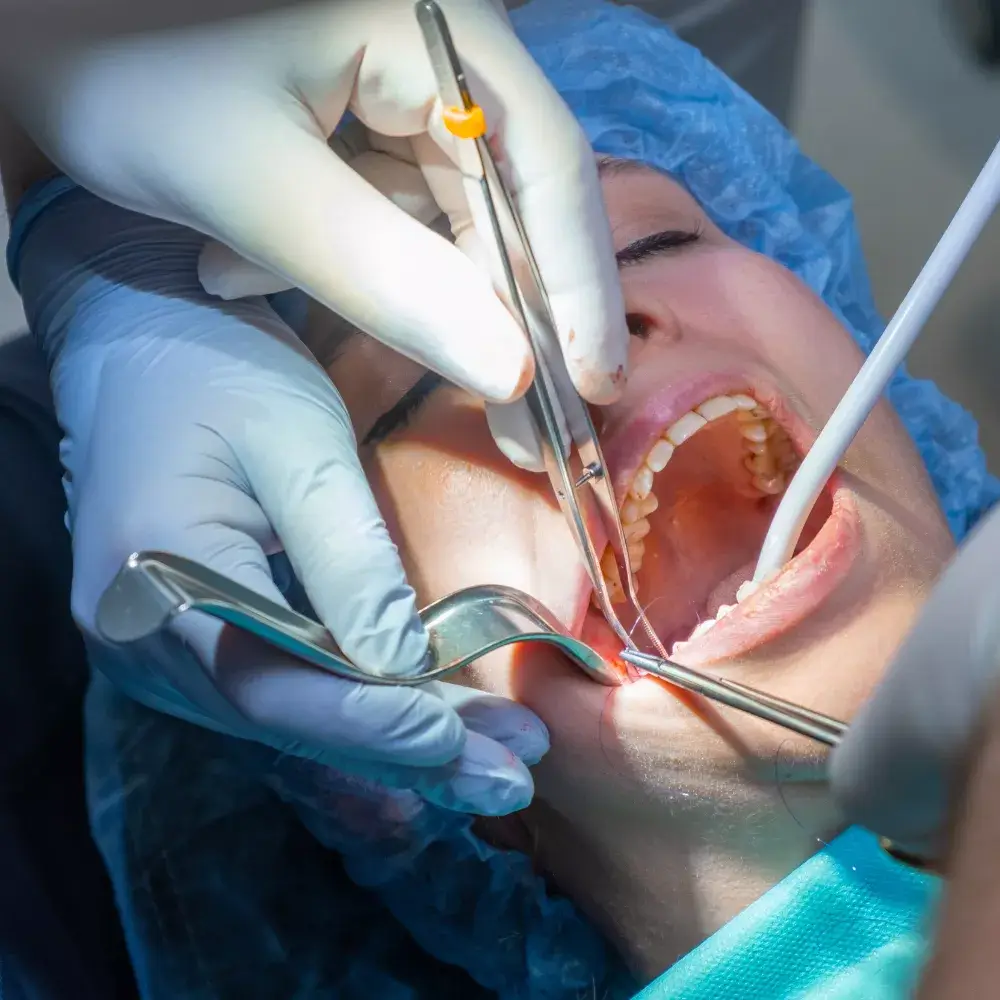
Root canal treatment at Aster Smiles is performed in-house by Dr. Thanh Huynh, DMD, FAGD — including molars, which most general dentists refer to an endodontist. Modern root canal treatment is genuinely no more uncomfortable than getting a filling. Same-day appointments for active tooth pain, with IV sedation available as a scheduled option for anxious patients, and the goal is always the same: stop the pain, save the tooth, and protect what’s already in your mouth — not pull it.
Last Reviewed by Dr. Thanh Huynh, DMD, FAGD — April 2026
Same-Day Pain Relief
For active tooth pain
Including Molars
All in-house
IV Sedation
Stay deeply relaxed through it
25% Off With Plan
Wellness Plan members save
Searching for a Root Canal Near Me? We Offer Walk-In Evaluations
If you’re in pain right now and searching for a root canal near me, Aster Smiles welcomes walk-in evaluations for patients in Cypress, Bridgeland, and Towne Lake — you don’t need to already be an established patient. Most root canals, including molars, are completed in-house in a single visit, so you’re not waiting on a referral to an outside endodontist. Call (832) 476-7676 to check same-day availability, or request an appointment online.
Forget What You've Heard. Modern Root Canal Treatment Isn't That Procedure.
You’re probably here for one of three reasons. Either your tooth has been throbbing for days and you can’t sleep through it. Or your dentist mentioned a root canal at your last visit and you’ve been carrying that worry around ever since. Or you’ve heard horror stories — from your dad, your aunt, that one coworker — and the words “root canal” make your stomach drop.
Here’s the truth that nobody seems to tell you up front: the procedure your aunt remembers from 1985 is not the procedure modern dentistry actually does. Today’s root canal, performed by a trained dentist with proper anesthesia and modern equipment, is genuinely no more uncomfortable than getting a routine filling. Most patients walk out wondering why they were so worried.
What makes a root canal painful is not the procedure. It’s the infected tooth that brought you here. The procedure removes the infection and stops the pain — usually within hours. The reason it has a bad reputation is that people remember the pain that made them seek treatment, then attribute it to the treatment itself.
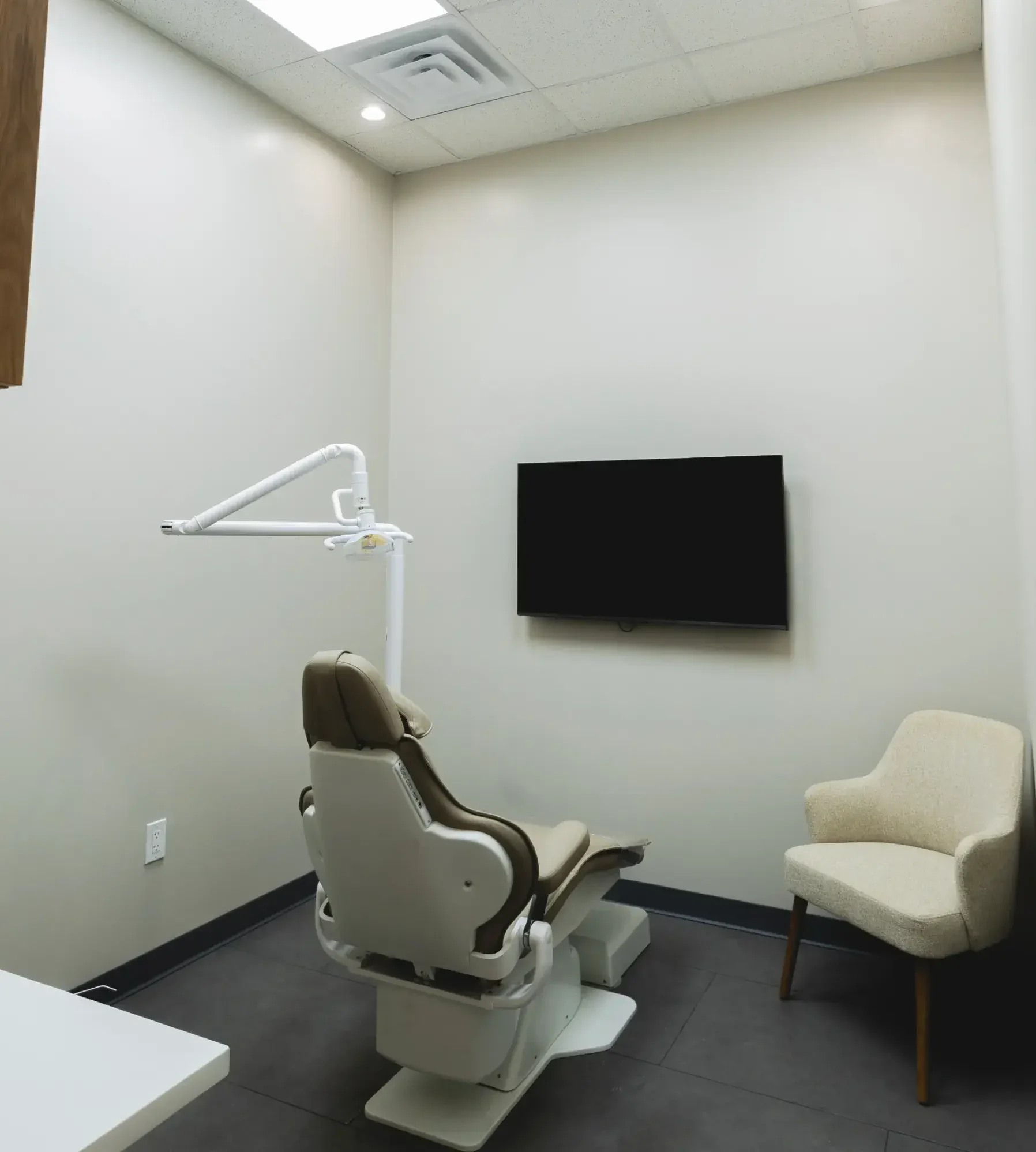
Root Canal Treatment That Saves Your Tooth — Without the Specialist Hand-Off
Most general dental practices send molar root canals to an endodontist (a root canal specialist), which means another office, another consultation, another insurance verification, and often a delay of days to weeks while you’re in pain.
Dr. Huynh holds advanced training in endodontics and performs root canal treatment in-house — including molars, which have multiple roots and complex anatomy. Same dentist who diagnoses the problem, performs the treatment, and places the crown that protects the tooth afterward. One office, one continuous plan.
The technique itself uses modern rotary instruments, digital X-rays for precision, and proper anesthetic protocols. The whole point of a root canal is to save the tooth — your natural tooth is always a better long-term outcome than an extraction and replacement, even when the replacement is a high-quality implant. We treat “keep the tooth” as the default goal and only recommend extraction when the tooth genuinely cannot be saved.
Signs You May Need Root Canal Treatment
A root canal is needed when the nerve and pulp inside a tooth are infected, inflamed, or dying. The tricky part is that the symptoms can range from severe to almost nothing at all. Here are the signs worth getting evaluated.
Persistent Tooth Pain
Lingering, throbbing pain in or around a specific tooth — especially pain that wakes you up at night or doesn't improve with ibuprofen. The most common reason patients seek root canal treatment.
Lingering Hot/Cold Sensitivity
Sharp pain to hot or cold that lingers for 30+ seconds after the trigger is gone — different from the brief twinge of normal sensitivity. This usually signals nerve inflammation.
Pain When Biting or Chewing
Sharp pain when you put pressure on a specific tooth. Often signals a crack, a deep cavity, or an infection that's reached the nerve.
Swelling or Tender Gums
A small bump on the gum near the tooth (sometimes called a "gum boil" or fistula) — often a sign that an abscess is draining. Often not painful but always significant.
Darkening or Discoloration
A tooth that's gradually turning gray, brown, or darker than the others. Often signals a dying or dead nerve — sometimes years after the original injury.
Deep Decay or Trauma History
A tooth with a previous large filling, crown, root canal, or sports injury — especially if symptoms have been gradually changing. Old work sometimes fails years after the fact.
What if there’s no pain — does that mean I don’t need a root canal?
Not necessarily. Some teeth with infected nerves stop hurting because the nerve has died — the pain went away, but the infection didn’t. These cases often need root canal treatment to remove the dead tissue and prevent the infection from spreading to surrounding bone. If your dentist or X-rays found something but you feel fine, the recommendation may still be valid. Bring your imaging in if you’d like a candid second opinion.
What You Get When You Choose Aster Smiles for Root Canal Treatment
All In-House — Including Molars
Diagnosis, treatment, and the crown that protects your tooth afterward all happen at Aster Smiles. No endodontist referral, no separate billing, no driving across town.
IV Sedation Available
Dr. Huynh is certified to provide IV sedation. You stay deeply relaxed and may remember little of the procedure — particularly helpful for highly anxious or gag-reflex patients.
Modern Endodontic Technique
Digital imaging for accurate canal mapping, rotary nickel-titanium instruments for cleaner shaping, and proper irrigation protocols — the same modern technique you'd get at a specialist office.
Same-Day Pain Relief
If you're calling because of active tooth pain, we hold same-day slots during business hours. Most patients leave with their pain dramatically reduced — usually within hours of the procedure.
Save-First Mindset
A natural tooth — even after a root canal — is a better long-term outcome than removing it. We treat "keep the tooth" as the default goal, recommending extraction only when the tooth genuinely cannot be saved.
Transparent Pricing
Written estimate before we begin — including the crown that follows. Most major PPO insurance accepted. Wellness Plan members save 25%. Financing available.
What Happens Before, During, and After Root Canal Treatment
STEP 1 · BEFORE
Diagnosis & Plan
Dr. Huynh examines the tooth, takes digital X-rays, and runs simple tests (cold, percussion, electric pulp testing) to confirm the nerve is the source of pain — not something else.
If root canal treatment is the right call, you’ll get a written estimate covering both the root canal AND the crown that follows it, sedation options explained, and the timing for the whole plan.
STEP 2 · DURING
The Root Canal Itself
Local anesthesia numbs the area completely. A small opening is made through the top of the tooth, the infected nerve tissue is removed, and the canals inside the roots are cleaned, shaped, and sealed.
Total chair time: 60–90 minutes for most front teeth and bicuspids; 90 minutes to 2 hours for molars (more canals, more anatomy). IV sedation available throughout.
STEP 3 · AFTER
Recovery & Crown
The active pain is usually gone within hours. Some mild tenderness for 2–3 days as the surrounding tissue heals — managed with ibuprofen.
A permanent crown is placed within a few weeks to protect the tooth long-term. Without the crown, the tooth becomes brittle and prone to cracking — so the crown is not optional.
Why Trust Aster Smiles for Root Canal Treatment
Root canal treatment requires precision. Each tooth has 1–4 canals, and missing one is the most common reason a root canal fails years later. Equipment, training, and technique are what determine the long-term outcome. Here’s what backs up every root canal at Aster Smiles:
- Dr. Thanh Huynh, DMD, FAGD — fellowship distinction held by fewer than 7% of dentists
- Advanced training in endodontics including molar root canal therapy
- Digital imaging and apex locators for precise canal length measurement
- Modern rotary nickel-titanium instruments for cleaner, faster shaping
- IV sedation under a TSBDE Level 3 (Moderate Parenteral Sedation) permit
- Complete in-house care: diagnosis → root canal → crown placement, all with the same dentist
Root Canal vs. Extraction — How to Decide
Root Canal Is Usually Better When
The tooth has enough healthy structure left · The roots are intact · The surrounding bone is healthy · It’s a tooth you’d otherwise want to keep (functional, visible, or both)
Extraction Is the Honest Answer When
The tooth is cracked vertically below the gumline · There’s not enough healthy structure to support a crown · The infection has caused significant bone loss · A previous root canal has failed and retreatment isn’t realistic
Root canal + crown costs more than extraction up front, but extraction always means future replacement (implant, bridge, or partial). When the math is run over 10 years, saving the tooth is usually the better deal — financially and biologically.
How Much Does Root Canal Treatment Cost in Cypress?
Cost depends on which tooth (front teeth have 1 canal, molars can have 4), and whether sedation is added. The crown that follows is a separate cost. We always quote both up front so there are no surprises.
OPTION 1
With Insurance
Most Major
PPO plans accepted
Most dental insurance covers root canal treatment as a basic restorative procedure, often at 50–80%. We verify your benefits up front so you know your out-of-pocket before scheduling. The crown is also typically covered.
OPTION 2 · BEST VALUE
Wellness Plan Members
25% Off
$24/mo adult plan. 25% off root canal AND the crown that follows. IV sedation is priced the same for every patient. Often saves more on a single root canal case than two years of plan dues. See plan →
OPTION 3
Financing Available
0% APR
Through CareCredit & Cherry
Don’t avoid treatment because of cost. Spread the root canal + crown total over monthly payments — including 0% APR plans for qualified applicants. We help you apply during your visit.
Specific dollar amounts depend on which tooth, the complexity of the canal anatomy, and the chosen sedation level. Every case starts with a clear, written estimate covering both the root canal and the crown that follows.
Patients Who Trusted Us With Their Tooth Pain
★★★★★
“My anxiety was through the roof, but the doctor was so fast and gentle, I didn’t feel any pain whatsoever. I really appreciate everything, what a great experience.”
— Alethea B., Cypress TX
★★★★★
“Dr. Huynh is a highly skilled and gentle dentist, so I rarely feel any pain during procedures. I always receive a clear explanation of costs before any procedure.”
— Tram N., Cypress TX
★★★★★
“Dr. Huynh was professional and took the time to explain everything clearly before the procedure. I felt well cared for and never rushed.”
— Don N., Cypress TX
Root Canal Treatment FAQs
Most dental plans cover root canal treatment, though what share they pay depends on your specific plan, deductible, and annual maximum. We work with many PPO plans including Aetna, Blue Cross Blue Shield of Texas, Cigna, Delta Dental, Guardian, MetLife, and UnitedHealthcare. Call (832) 476-7676 with your card handy and we verify your exact benefits before treatment — you should know the number before you are numb, not at checkout.
Do not let the bill talk you into pulling a savable tooth — an extraction plus a replacement implant costs far more down the road than the root canal that would have kept the tooth. You get a written estimate up front, financing is available through Cherry and CareCredit (subject to approval), and our Dental Wellness Plan (from $24/month) includes savings on treatment.
The honest answer: no, the procedure itself doesn’t hurt. Local anesthesia numbs the area completely — you feel pressure, not pain. What hurts is the infected tooth that brought you in, and the root canal removes the infection that was causing the pain. Most patients are surprised at how much better they feel within hours of the procedure. The horror-story reputation comes from a different era of dentistry — modern technique and equipment make root canal treatment genuinely no more uncomfortable than getting a filling. IV sedation is available if you have severe anxiety or want to stay deeply relaxed through it entirely.
Most consultations are scheduled within the same week, sometimes within a day or two. If you’re in active pain, we hold same-day emergency slots during business hours — call (832) 476-7676. We’ll get you in, confirm the diagnosis, and start treatment the same day in most cases.
We do all root canals in-house, including molars. Many general dentists refer molar root canals to an endodontist (root canal specialist) because molars have multiple canals and complex anatomy. Dr. Huynh has advanced training in endodontics and handles molar cases in-office — same dentist who diagnoses, performs the root canal, and places the crown afterward. One office, one continuous plan, no specialist hand-off.
For front teeth and bicuspids: 60–90 minutes total chair time. For molars: 90 minutes to 2 hours, because there are more canals to clean and shape. Most root canals are completed in a single visit. Occasionally a second visit is needed for severely infected teeth — we’ll tell you up front if that’s the case.
A root-canal-treated tooth is hollowed out and weaker than a healthy tooth. Without a crown to protect it, the tooth is prone to cracking — and a cracked root-canaled tooth often can’t be saved a second time. The crown reinforces the tooth and is what makes the difference between a 5-year fix and a 25-year fix. We always quote the root canal AND crown together so the full cost is transparent.
Cost depends on which tooth (molars cost more than front teeth because of the canal complexity), and whether sedation is added. Most major dental insurance covers root canals as a basic restorative procedure (typically 50–80% covered). The crown that follows is typically also covered. Wellness Plan members save 25% on root canal AND crown. IV sedation is priced the same for every patient. Financing through CareCredit and Cherry is available, including 0% APR for qualified applicants. Every case gets a clear, written estimate covering both procedures before we begin.
A properly performed root canal with a well-fitted crown can last 20+ years — sometimes the rest of your life. Long-term success rates are around 90–95% when modern technique is used and the crown is placed promptly. Failure typically happens when a canal is missed during the original procedure, when bacteria leak in around the crown over time, or when the tooth cracks. Quality of the original work matters enormously.
Almost always, the root canal. A natural tooth is the gold standard — better than any replacement, including a high-quality implant. Extraction seems cheaper up front, but it always means future replacement (implant, bridge, or partial denture), and replacements can fail in ways natural teeth don’t. Over a 10-year window, root canal + crown is usually the cheaper AND better outcome. Extraction is the right call when the tooth genuinely cannot be saved — cracked below the gumline, severe bone loss, failed retreatment — but those are the exceptions, not the rule.
Tooth Hurting? Don't Wait. Book Your Root Canal Treatment Today.
<p style=”text-align: center;”>Modern technique. Same-day pain relief. All in-house — including molars. The procedure is genuinely not what your aunt remembers. At <a href=”/contact/”>our Cypress dental office</a> on FM 529. If you’re in pain right now, call us — same-day appointments during business hours.</p>Modern technique. Same-day pain relief. All in-house — including molars. The procedure is genuinely not what your aunt remembers. At our Cypress dental office on FM 529. If you’re in pain right now, call us — same-day appointments during business hours.